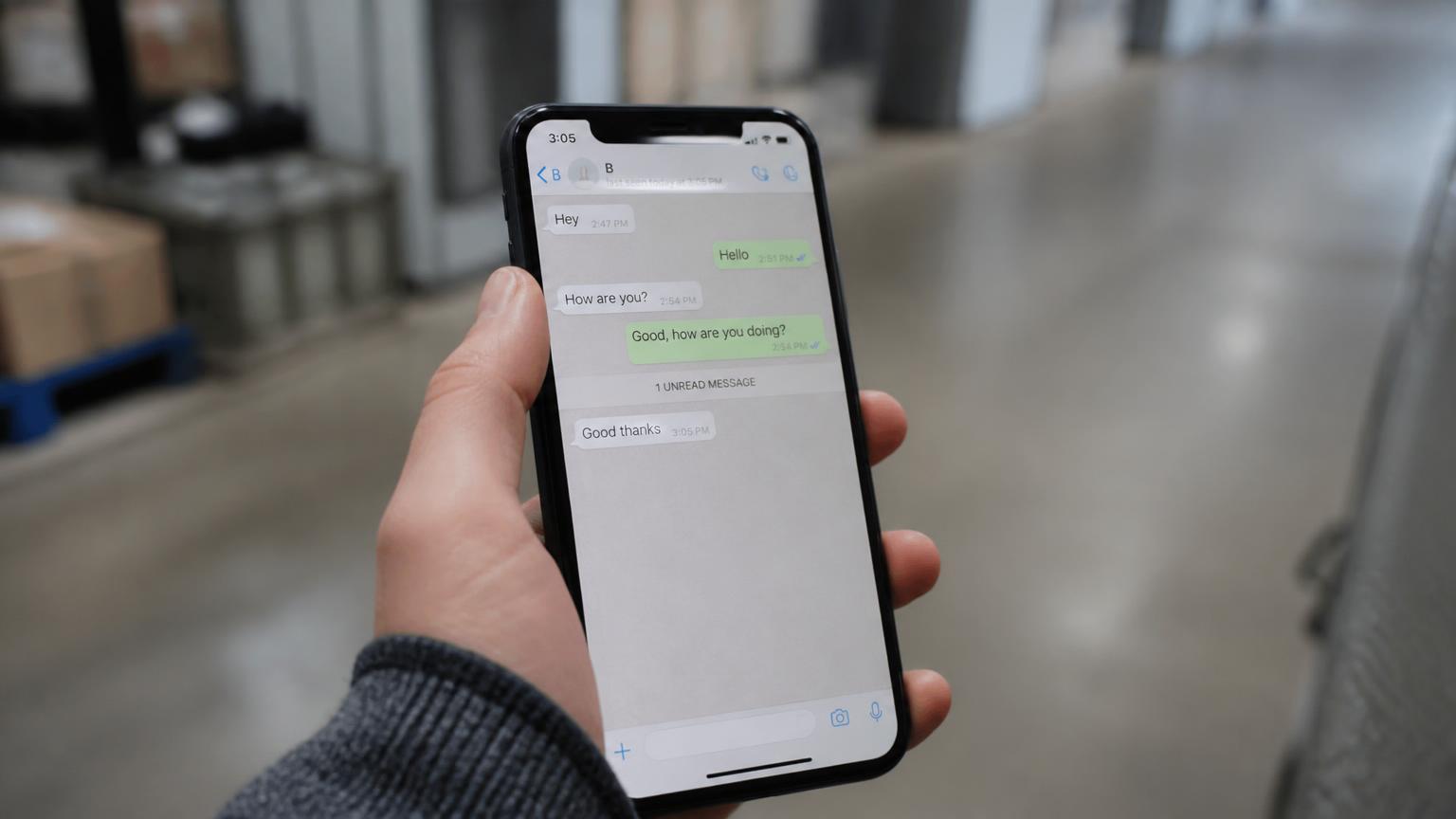
5 Mistakes When Sourcing Candidates via WhatsApp
HR Tips

5 Mistakes When Sourcing Candidates via WhatsApp

2 min read

WhatsApp has 90%+ penetration in both Slovakia and Czechia. For candidates, it's the most natural communication channel – fast, mobile, without formality. For companies, it's a goldmine, if they know how to work with it.

Unfortunately, most companies treat it like email with a green color scheme. And they make five mistakes that cost them candidates.

1. Too formal first contact

"Dear Sir/Madam, I am writing to you regarding our job listing published on portal XY, where you expressed interest…"

You can send this by email. On WhatsApp, it sounds like you're writing to the tax office. The candidate won't start responding, and if they do, they'll also be formal. The conversation freezes.

How to do it better: short, human, straight to the point. "Hi Peter, we saw your profile. We have a warehouse position in Bratislava, gross 1,400 €, morning and afternoon shifts. Interested?"

2. Responding after two days

The candidate sends a message on Thursday evening. The recruiter sees it Monday morning. That's five days. In that time, the candidate received an offer from a competitor and has already started.

WhatsApp is a synchronous channel. Candidates expect a reply within hours, not days. If you don't have the capacity to respond within two hours during a workday, you need automation that at least confirms receipt and starts the conversation.

3. Sending links instead of conversing

"Please fill out the form at this link."

The candidate clicks. A 12-question form with a captcha opens. They close the tab and never come back.

WhatsApp works when you actually communicate through it. Not when you use it as a delivery service for outbound links. Take a look, for example, at how Surikado handles this – the entire screening happens directly in the chat, and the candidate doesn't have to open anything.

4. The same template for everyone

A copy-paste message is easy to spot. "Hello, we're looking for candidates for the {POSITION} role…" without specifics – location, salary, shifts, benefits – gets responses from desperate people. Not from the best ones.

Even if AI composes the message, it should include at least five concrete parameters the candidate needs to decide whether to open the conversation.

5. Ignoring "not interested"

A candidate writes "not now, thanks". The recruiter deletes them from the spreadsheet. Three months later, the same candidate is job hunting again – and never reaches out, because they don't remember you.

Not interested today ≠ not interested forever. A polite follow-up after three months ("Hi, just checking in to see whether you've found what you were looking for in the meantime") has a 20–30% success rate. Without spending anything on new sourcing.

Summary

WhatsApp is not email. It's not a portal. It's a conversational channel where people value:

  • speed
  • a human tone
  • specificity
  • continuity

Companies that understand this have double the response rate in the same market compared to those still using it as a delivery service for links.

Share
Why Classic Job Portals Are Starting to Fail
Recruitment

Why Classic Job Portals Are Starting to Fail

3 min read

Job portals emerged at a time when looking for work meant browsing newspapers or walking around a shopping mall checking storefronts for job ads. They were a huge improvement. They worked for twenty years.

In 2026, their model is breaking down on two levels – economically for companies and experientially for candidates. Let's look at why.

The economics no longer add up

The classic portal model is simple: you pay for the listing, not for the result.

  • Listing: 250 – 500 €
  • Average number of responses: 20 – 60
  • Of which relevant: 3 – 8
  • Of which invited to interview: 1 – 3
  • Of which hired: 0 or 1

The real cost per hire through a portal today comes out to 500 – 2,000 €. And that's without any guarantee. If no one is found, the money is gone.

Staffing agencies offer a result, but for a commission of 15–25% of the annual salary. For a mid-level position, that's easily 4–8 thousand euros.

In between, there's a gap being filled by AI tools with a pay-per-evaluation model – you pay for each CV processed, not for the listing or for the placement. For the same number of candidates, the cost is significantly lower.

Candidates are moving elsewhere

The second problem is even bigger – candidates are stopping using portals. Not all of them, but the best ones.

Why? Because they have to:

  • Create an account.
  • Fill out a profile with 30 fields.
  • Upload a CV.
  • Write a cover letter.
  • Apply via a button, with no idea whether anyone will actually read it.

For passive candidates (those who aren't actively looking for a job but would consider a better offer), this barrier is too high. And passive candidates are usually the highest quality ones – because they're already employed somewhere today.

Where they're going instead

Three directions:

  1. LinkedIn and referrals – especially for IT, office, and management positions.
  2. WhatsApp and conversational channels – especially for operational positions (manufacturing, warehousing, HoReCa, transport). If this interests you, check out Surikado for companies.
  3. Direct search on the employer's website – people go to the website of the company they want to work for and look for "careers" there.

Portals remain relevant for certain segments – especially for classic admin positions and certain regions. But their role is no longer "the universal first place to post a listing".

What to do about it now

If you currently hire mainly through portals, there's no need to panic – but there's also no need to wait. A practical step:

  • Split positions into two groups based on where candidates actually look for them.
  • For operational positions, try an alternative to portals for 60 days (e.g. WhatsApp-first recruitment).
  • Measure cost per hire, not cost per response. The number will surprise you.

Portals won't disappear. But their share of the mix will keep shrinking, and companies that adjust their mix sooner will end up with better teams for the same budget.

Share

Find a better career and job offers today

Thousands of job offers in Slovakia. AI picks the best ones for you — free, no CV, via WhatsApp.

Find a job via WhatsApp